
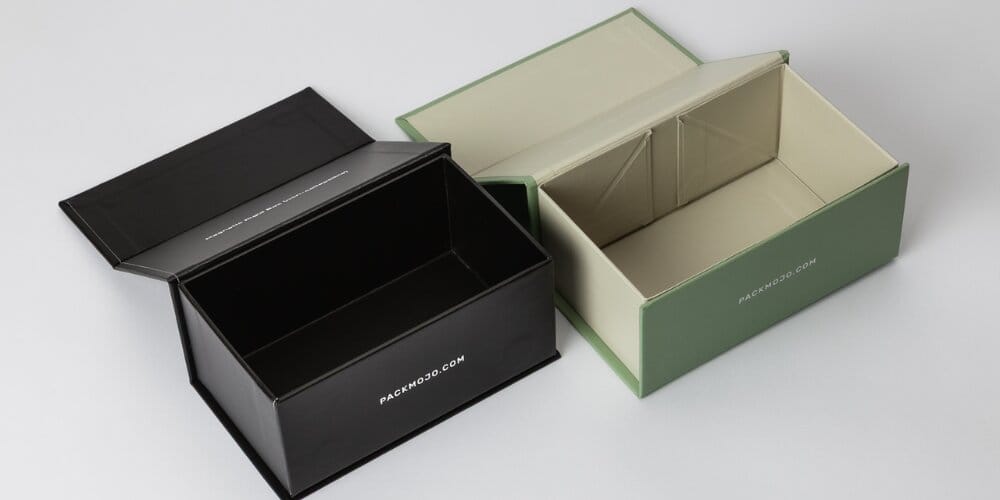
A tuck-end folding carton keeps material costs and shelf footprint low, a two-piece lift-off rigid box adds a more substantial feel, and a magnetic closure rigid box offers an attached lid for gift sets or collector releases. These are three common options for packaging complete card decks, and the right pick depends on print run size, retail channel and how the deck will be stored and handled after purchase.
This guide covers how each structure is built, the factors that affect its cost, how it takes print and finish, and where it fits best. There's also a comparison table you can use as a quick reference before specifying a run.
The Three Structures, Explained
Tuck boxes use folding carton stock, while lift-off and magnetic closure rigid boxes use a chipboard core wrapped in paper. The two rigid styles differ primarily in how the lid opens, not in an automatic step up in board thickness or durability.
Custom Tuck-End Box
A tuck box is made from a single piece of cardstock, die-cut, creased and glued at the side seam. Its flaps tuck inside the carton to close. The lightweight construction ships flat, keeping freight volume and storage requirements low before packing.
For poker-size cards, 2.5 by 3.5 inches is a common starting point, but the box should be sized around the actual deck. Card count, stock thickness and sleeves all affect the required internal dimensions. The fit should limit movement without making the cards difficult to remove.
A tuck box works well for a compact deck with few accessories. It can also remain the deck's everyday storage box, although repeated opening and closing will gradually wear the flap and creases.
Two-Piece Rigid Box With a Lift-Off Lid
A two-piece rigid box separates the lid from the base, so the deck sits in a tray and the lid lifts straight off. Printed paper wraps around a chipboard core, giving the box a more substantial feel than a folding carton.
Full-cover lids extend over the entire base, while partial-cover lids leave some of the base exposed. Lid depth and fit affect how easily the box opens, so these details are worth checking with a physical sample.
PackMojo's rigid boxes include both styles. A fitted insert can separate the deck from a guidebook or accessories, but a simple deck-only layout may not need one.
Magnetic Closure Rigid Box
A magnetic closure rigid box also uses a wrapped chipboard core, but its lid stays attached and closes with concealed magnets. This opening style suits gift sets, collector editions and decks that benefit from an organized interior.
The magnetic closure does not automatically make the box thicker or more protective than a lift-off rigid box. Protection depends on board specification, dimensions, construction and internal fit.
PackMojo offers magnetic closure boxes in non-collapsible and collapsible formats. Non-collapsible boxes arrive formed and ready to pack. Collapsible versions ship flat and require assembly before use.
Comparing Cost, Feel and Packing Requirements
Here's how the three structures compare on the factors that commonly influence a deck-packaging decision.
| Structure | Typical relative cost* | Feel and presentation | Durability considerations | Delivered format / packing steps | PackMojo minimum order |
|---|---|---|---|---|---|
| Tuck-end folding carton | Lowest | Compact and familiar; finishes can add a premium feel | Flaps and creases can wear with repeated use | Shipped flat; open carton, close base, load deck and close top | From 100 units per variation |
| Two-piece lift-off rigid box | Higher | Substantial feel with a separate lid and base | Chipboard adds structural support; corners and wrapping still need transit protection | Arrives formed; load contents and replace lid | From 300 units per variation |
| Magnetic closure rigid box | Typically highest | Attached lid with a magnetic closure | Protection depends on construction and internal fit | Non-collapsible arrives formed; collapsible requires assembly | From 300 units per variation |
*Relative costs assume broadly comparable dimensions, printing and finishes. Inserts and other customizations can change the ranking.
A tuck box generally costs less because it uses less material and requires fewer manufacturing steps. Rigid styles add chipboard, wrapping and assembly work, while magnetic closure boxes also require magnets and an attached-lid construction.
Higher quantities typically reduce unit costs, but the gap between styles does not narrow by a predictable amount. A useful comparison at 500 or 5,000 units needs matched specifications, including internal dimensions, print coverage, finishes and inserts.
Freight matters too. Flat-packed folding cartons occupy less space than formed rigid boxes. Compare packaging and shipping costs together on the PackMojo platform rather than choosing on unit price alone.
Packing speed depends on the workflow. A formed rigid box may be quick to load, while a flat carton needs opening and closing. Adding an insert, guidebook or multiple card stacks introduces handling steps regardless of the box style.
Print and Finish by Structure
The material and artwork determine which finishes work best. A magnetic closure does not, by itself, create more finishing options than a lift-off lid.
- Tuck box: Paperboard supports matte, glossy and soft-touch finishes, along with foil stamping and spot UV. Embossing or debossing can also add texture, depending on the stock and artwork.
- Two-piece rigid box: The wrapping paper supports finishes such as foil stamping and spot UV. Embossing depth depends on whether the treatment affects only the wrapping paper or both the paper and chipboard.
- Magnetic closure rigid box: Similar finishing options apply because the construction also uses wrapped chipboard. Finish placement should account for folds, hinges and wrapped edges.
For rigid boxes, light embossing may affect the wrapping paper alone, while deep embossing can pass through both the paper and chipboard where the artwork and construction allow it. Fine lines and intricate details need particular care. PackMojo's embossing guide explains these material limitations.
A physical sample is useful when the tactile effect is central to the design. A finish that looks strong in a digital mockup may feel much subtler on the chosen material.
Retail Environment Shapes the Right Choice
The sales channel affects packaging requirements, but it does not dictate one box style.
Hobby Shop Shelf
Compact dimensions and legible artwork help stores display more decks in a limited space. A tuck box can work well for a standard retail release, while a lift-off rigid box may suit a higher-priced deck or a set with additional contents.
Consider how the store will display the product. If boxes are stacked rather than shown face-out, the title needs to remain easy to identify from the visible side.
Game Store Counter
Counter space is limited, so footprint and selling price matter alongside presentation. A two-piece rigid box can give a deck a more substantial feel, but that benefit needs to support the product's margin.
A well-finished tuck box can also work at checkout, particularly when the deck is compact and priced for an impulse purchase.
Direct-to-Consumer Parcel
Separate the presentation box from the shipping package. A rigid box can organize the contents and create a deliberate opening experience, but it still needs suitable outer protection against dents, scratches and impacts.
A tuck box can also ship safely when packed correctly. Compare properly protected formats rather than a fitted rigid box against a loose tuck box.
Running Two Editions of the Same Deck
A publisher may offer a standard tuck-box edition for wider retail distribution alongside a rigid collector edition for direct sales, crowdfunding rewards or convention releases. The standard edition keeps packaging costs lower, while the collector version can accommodate a guidebook, bonus cards or other extras.
Brand artwork can be reused across both editions, but each structure needs its own dieline and artwork layout. Panel sizes, folds and wrapping allowances differ, so artwork should be adapted rather than transferred unchanged.
A custom box insert can help organize a multi-item collector set. Choose the insert material around the contents and required protection; a lightweight deck does not automatically need foam.
Which Deck Box Is Cheapest at Low Volume?
A tuck-end folding carton is generally the lowest-cost option for a simple deck because it uses less material and ships flat. Finishes, unusual dimensions and accessories can still add significantly to the total.
At small quantities, compare complete project costs, including setup, samples, freight and packing labor.
Is a Rigid Box Worth It for a First Edition?
It depends on the selling price and what the edition includes. A rigid box may suit a collector release or a deck bundled with a guidebook, but being a first edition does not make it necessary.
For a straightforward retail launch, a tuck box can keep the initial investment lower. A lift-off or magnetic rigid box becomes more compelling when its presentation and layout support a higher price point.
Can a Tuck Box Be Made to Feel Premium?
Yes. Paperboard selection and finish can change the feel without changing the structure. Matte or soft-touch finishes and a foil-stamped logo can give a compact tuck box a more considered presentation.
Keep the design practical. Clear artwork, comfortable card removal and a flap that closes cleanly matter as much as decorative treatments.
What Is the Minimum Order for Each?
PackMojo's folding carton boxes start at 100 units per variation. Two-piece lift-off rigid boxes and magnetic closure rigid boxes start at 300 units per variation.
These are product-category minimums. Confirm the requirements for the selected configuration, particularly when adding custom inserts or other components. Different sizes, materials or printed artwork count as separate variations.
Closing Thoughts
Choose the structure around the deck's dimensions, selling price and intended use. Tuck boxes keep simple releases compact, while lift-off and magnetic rigid boxes offer different ways to present and organize higher-priced sets. PackMojo can help compare specifications and test the fit before production.