
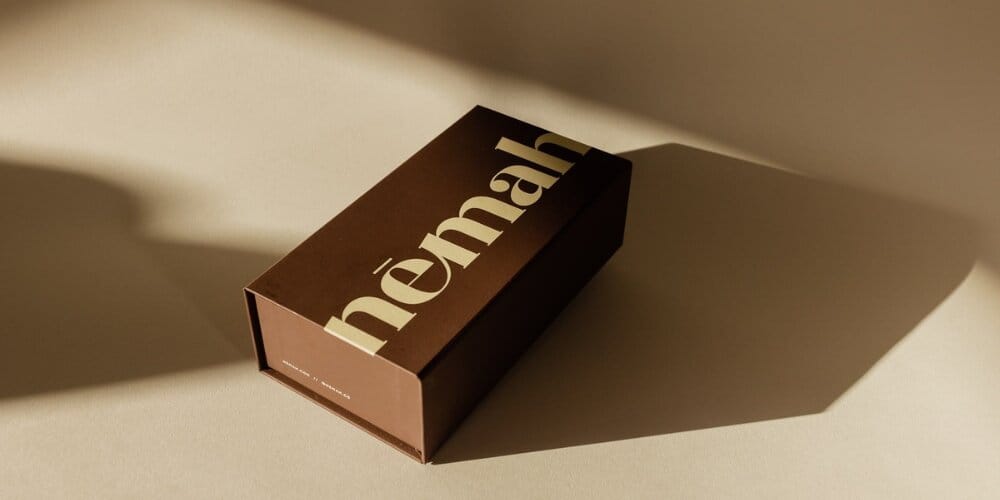
The choice between a standard rigid box and a magnetic closure rigid box is one of the most common decisions scaling brands face in luxury packaging. Both formats are built from heavyweight chipboard and print beautifully. The structural differences, though, shape the entire unboxing ritual and affect your cost per unit, your production lead time, and how your customer remembers opening the box. This guide walks through each format so you can make the call before samples are ordered, not after.
1. How Each Box Is Actually Built
Both box types share a common foundation: thick, rigid chipboard wrapped in printed or unprinted paper. That shared DNA is what makes them feel premium against a corrugated box or folding carton. Beyond that, their construction diverges in ways that affect durability, shipping resilience, and how they function at scale.
Standard rigid box (two-piece lid and base): Two separate components, a lid and a base, each formed from chipboard and wrapped independently. The lid sits over the base with a controlled depth, so the fit is snug but the two pieces are never connected. Think of it like a watch box: the top lifts cleanly away, the base stays put, and the product is fully revealed in one motion.
PackMojo offers three sub-styles within this category: the Full Cover Lid (where the lid extends to the bottom of the base for a seamless exterior), the Partial Cover Lid (where a shorter lid leaves part of the base exposed for easier opening), and the Shoulder and Neck (a three-piece construction with an internal collar that creates a layered, multi-dimensional reveal). Each sub-style shares the same two-piece opening gesture, but the structural nuances affect presentation and perceived luxury differently. Our post on How to Choose the Right Luxury Box breaks these down in more detail.
Magnetic closure rigid box: A single unified structure with a hinged lid and magnets embedded into the lid and base panels. The lid swings open rather than lifting off entirely, and the magnets pull it shut with a tactile click. Because the lid and body are joined at the spine, the box holds its geometry more consistently over repeated opens and closes. That hinge also means there's no lid to misplace or separate during retail display or gifting.
PackMojo offers this type of box in two styles: a non-collapsible magnetic rigid box that ships fully formed and ready to pack, and a collapsible magnetic rigid box that ships flat and assembles instantly using built-in adhesive corners. The collapsible version delivers the same premium look, sturdy feel, and magnetic snap, but significantly reduces freight and storage costs. For brands managing warehouse space or shipping packaging to a fulfillment center, the collapsible option is worth serious consideration.
For heavy products, the two-piece structure gives you more clearance to engineer a snug base without stressing a hinge. For products that will be opened frequently, or displayed open, the hinged magnetic format holds its shape under repeated use.
2. The Unboxing Experience Side by Side
The tactile quality of each format signals something different to the person holding it. They create different moments, and the right one depends on how your customer interacts with the box.
- Two-piece rigid lid reveal: Lifting a well-fitted lid off a rigid base creates a slow, deliberate reveal. There's a brief resistance as the lid breaks the friction of the fit, then a clean separation. It's a gesture that feels considered and unhurried, which suits brands where the product deserves a moment of ceremony.
- Magnetic snap: The magnet-assisted close is what most people remember about this format. Opening is smooth and one-handed. Closing produces an audible, satisfying click. For gifting contexts and PR sends, that click is part of the product story itself. It photographs and films well, which matters for unboxing content that customers share.
The sensory difference matters most for repeat interactions. A customer who keeps a magnetic closure box on their vanity and opens it daily will notice the hinge quality and the magnet strength every time. A two-piece rigid box used for a one-time gift delivery serves its purpose and is then retired or repurposed. Matching the format to the intended use pattern is where a lot of brands go wrong.
3. Finishing Options Available for Each Style
Both formats support the full range of premium finishes available in luxury rigid box packaging. The difference is mostly in surface area and where each finish is most effective.
- Soft-touch lamination: Works beautifully on both. On the magnetic box, the exterior wrap is a continuous surface that rewards a velvety matte finish.
- Foil stamping and embossing: Available on both. Both lid surfaces provide a flat, uninterrupted panel for a centered foil logo or embossed design.
- Spot UV: Effective on both, particularly when used to contrast a matte base laminate with a glossy logo or pattern.
- Custom inserts: Both formats are fully compatible with custom box inserts, including foam and cardboard inlays.Both formats can accommodate deep foam inserts - base depth is custom-sized in either case. The difference is that a two-piece lid adds overhead clearance by telescoping over the base, so products or inserts that sit slightly above the base walls are still covered. In a magnetic box, everything needs to sit within the base walls for the lid to close cleanly.
The magnetic box's interior is worth thinking about separately. Because the lid opens on a hinge rather than lifting away, the inside of the lid becomes visible immediately on opening. Brands that print their story, a product benefit, or a brand mark on the interior lid create an additional touchpoint that a two-piece box can't replicate in the same way.
4. Cost, MOQ, and Production Considerations
Both formats are available from PackMojo starting at 300 units. The per-unit cost, however, is not the same. Magnetic closure boxes carry a higher price point because the magnet mechanism, the hinge construction, and the precision required to align the closure all add production complexity. For brands comparing costs across formats, the table below summarizes the key variables.
| Feature | Standard Rigid Box (Lid and Base) | Magnetic Closure Rigid Box | Rigid Drawer Box |
|---|---|---|---|
| Opening mechanism | Lift-off lid, two separate pieces | Hinged lid with embedded magnets | Pull-out sliding tray, no hinge |
| Board construction | Heavyweight chipboard, wrapped | Heavyweight chipboard, wrapped, hinged spine | Heavyweight chipboard outer sleeve & inner tray |
| Unboxing gesture | Deliberate vertical lift; full reveal | One-handed swing; quick vertical reveal | Smooth horizontal slide; progressive reveal |
| Gifting suitability | Standard retail/gift sets | High-end PR sends, seasonal gift boxes | Ultra-premium, experiential gifting |
| Repeat-use feel | Gradually loosens with friction over time | Holds shape well via magnetic snap | Functions like a durable storage drawer |
| Relative cost tier | Lower | Higher (magnet + hinge add cost) | Premium (sleeve-and-tray assembly adds cost) |
| Best for | Retail shelf, higher volume, gift sets | Gifting, jewelry, PR, cosmetics sets | Luxury timepieces, eyewear, premium kits |
The Third Contender: Rigid Drawer Boxes vs. Magnetic Closures
When weighing a magnetic closure against a rigid drawer box for luxury gifting, the decision comes down to the direction of the reveal and long-term utility. While a magnetic box relies on a vertical, hinged swing and an audible snap to surprise the recipient, a drawer box utilizes a pull-out sliding tray mechanism. With no hinge to wear out, the drawer box offers a highly durable, premium repeat-use feel, essentially doubling as a permanent storage chest on a customer's vanity. However, because engineering a perfectly flush sleeve and inner tray requires precise structural alignment, drawer boxes sit firmly in a premium cost tier alongside magnetic alternatives.
Production for the above box styles runs 12-16 days plus shipping. Pricing is quote-based and scales with quantity, finish selection, and insert requirements. You can request a quote for either format directly from PackMojo's platform.
PackMojo makes both formats for brands weighing this exact decision: magnetic closure rigid boxes with a hinged lid and embedded magnets, and rigid drawer boxes with a sliding tray and no hinge. Both are available with custom finishes and inserts, and you can request a quote for either directly from PackMojo's platform.
5. When a Rigid Box Is the Right Call
The standard two-piece rigid box wins in several specific scenarios, and choosing it for the right reasons is just as deliberate as choosing a magnetic format.
- Higher-volume retail programs: When you're placing orders well above the minimum and cost efficiency at scale matters, the lower per-unit price of a two-piece box is a meaningful advantage.
- Deep foam or cardboard inserts: Products that need a deep structural cavity - like a heavy candle, a fragrance bottle, or a multi-piece set - often fit more naturally in a two-piece base where the full interior depth is uninterrupted by a hinge.
- The reveal is the ritual: Some categories have built their brand identity around a clean lid-lift. If your customers know that gesture and expect it, changing to a hinged format can feel unfamiliar rather than elevated.
- Retail shelf presence: Two-piece rigid boxes stack and store cleanly in retail environments. The lid-off display format works well for countertop merchandising where the product itself needs to be visible.
6. When a Magnetic Closure Box Is the Right Call
Magnetic closure rigid boxes have become the dominant format in gifting, direct-to-consumer luxury, and high-end cosmetics for good reason. The format performs best in these contexts.
- Gifting and seasonal sets: Custom magnetic gift boxes present well and function as part of the gift itself. Recipients often keep and reuse them, extending the brand's presence beyond the initial purchase.
- Jewelry and accessories: The one-handed open and the audible close suit small, precious items where the packaging ceremony should feel proportional to the product.
- PR and influencer sends: The magnetic snap creates a moment worth filming. From what we've seen, the magnetic format tends to outperform a lift-off lid in unboxing content - the audible close and one-handed open translate well on video.
- Cosmetics and beauty sets: The hinged structure keeps the presentation intact through shipping and delivery. The interior lid offers a prime location for a brand message or ingredient story.
- Repeat-open scenarios: If your customer will open the box multiple times, the magnet and hinge hold up better than a lift-off lid that gradually loosens with friction over time.
- Storage-conscious fulfillment: If warehouse space or freight cost is a concern, the collapsible magnetic rigid box ships flat and assembles in seconds, giving you the same premium presentation without the bulk of a pre-formed box in storage.
If you want to feel the difference before ordering, PackMojo's sample kit includes physical examples of rigid box constructions so you can assess the quality, board weight, and finish options in hand before committing to a run. You can also order a structural sample or a pre-production sample of either format in your exact dimensions and specifications.
Closing Thoughts
The standard rigid box and the magnetic closure box each serve a specific purpose, and the best choice depends on your product weight, your typical order context (gifting versus retail), your per-unit budget, and how your customer experiences the packaging. Getting a physical sample of both before a production run is the most practical way to make that call with confidence. PackMojo offers both formats with full customization across materials, finishes, and inserts, with production completed in 12-16 days plus shipping.