
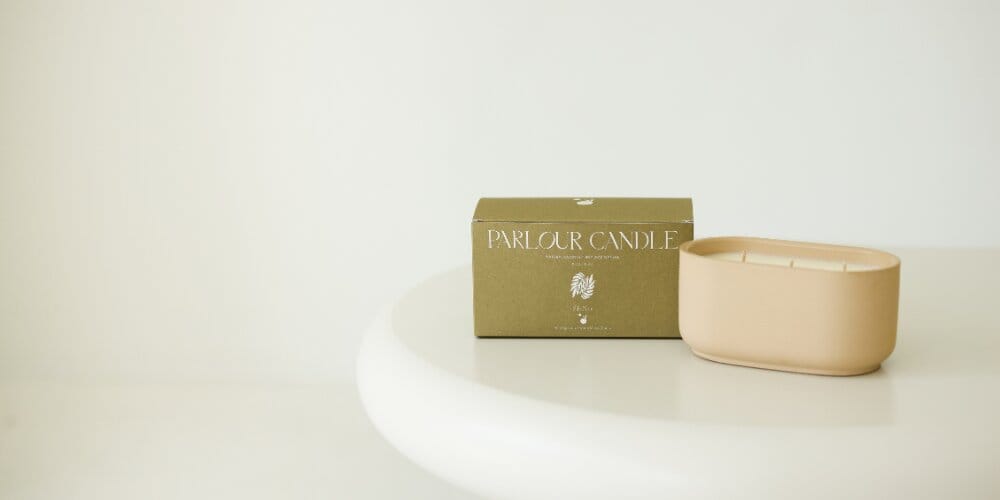
Your packaging format makes a brand statement before the customer reads a single word. The moment a shopper picks up two competing products side by side, the physical weight, the resistance of the lid, and the solidity of the structure have already shaped their sense of which product is worth more. That perception happens fast, well before any copy, color, or logo registers. That's why the choice between a rigid box and a folding carton isn't a logistics decision. It's a positioning decision.
The honest answer, though, is that neither format is universally more premium. What follows is a direct comparison of how each performs on construction, finish options, shelf presence, channel fit, and cost, so you can make the call that's right for your brand.
1. Structure and Materials: What Each Box Is Actually Made Of
The most fundamental difference between the two formats comes down to what they're built from and how they hold their shape.
Rigid boxes are constructed from thick chipboard, typically wrapped in a printed or decorative paper. The structure is permanently assembled. It does not collapse, fold flat, or flex under pressure. That non-collapsibility is both its greatest strength and its most significant logistical constraint. The walls don't give when squeezed, which creates the perception of density and permanence that makes a product feel expensive before it's even opened.
Folding cartons are made from lightweight paperboard, die-cut to shape, scored along fold lines, and shipped flat. They're assembled at the point of use. The material is thinner by design, which keeps costs and shipping weight low, but it also means the box has some flex when handled. A well-made folding carton at a higher board weight can feel surprisingly sturdy, but it will never replicate the solid mass of a rigid box.
| Attribute | Rigid Box | Folding Carton |
|---|---|---|
| Core material | Thick chipboard with paper wrap | Lightweight paperboard, die-cut |
| Structure | Permanently assembled, non-collapsible | Ships flat, assembled at use |
| In-hand feel | Dense, solid, heavy | Lighter, some flex at lower board weights |
| Storage efficiency | Takes full volume even when empty | Stores flat, far fewer square feet per unit |
| MOQ (PackMojo) | From 300 units | From 100 units |
2. Surface Finish Options and Visual Range
Both formats support a wide range of print and finish options, and both can look genuinely premium on a shelf. The difference is that a rigid box carries a structural premium that surface finishes alone can't replicate.
Finishes commonly applied to rigid boxes include:
- Soft-touch lamination for a velvety, tactile surface that signals quality immediately
- Foil stamping in gold, silver, or custom colors for metallic accents on logos or text
- Embossing and debossing to create raised or recessed texture in the wrap
- Spot UV coating to create contrast between matte and gloss areas
Beyond standard rigid boxes, the broader rigid box family includes formats that add a functional tactile dimension to the opening experience. Magnetic closure rigid boxes use embedded magnets for a controlled, satisfying lid close, while rigid drawer boxes introduce a sliding reveal with a ribbon pull. These aren't finishes you add to a standard rigid box - they're distinct structures - but they're worth knowing about if the opening moment is central to your brand experience.
Folding cartons support a comparable range of surface treatments, including matte and glossy coatings, spot UV, foil stamping, and embossing. They also have access to varnish (a water-based, eco-friendly coating option) that isn't available on rigid boxes - a useful detail if sustainability is a priority for your brand. What folding cartons can't fully replicate is the weight and resistance of the rigid structure itself. A soft-touch folding carton with beautiful print work still gives slightly when you squeeze it. Pick up a rigid box with the same soft-touch finish, and the surface quality and the structural solidity reinforce each other in a way that's hard to achieve with paperboard alone.
3. Shelf Presence and Consumer Perception
Anyone who's picked up an Apple product box knows this intuitively: the weight and resistance of the packaging changed what you expected to find inside before you opened it. That's not accidental. Physical cues - how heavy a box feels, how its surface responds to your thumb, how much resistance the lid gives when you lift it - shape value perception before the product is even visible. In categories like cosmetics, fragrance, and consumer electronics, those cues directly influence both purchase decisions and whether a customer comes back.
On a retail shelf, a rigid box reads differently from across the aisle. It holds its shape, its corners are sharp, and its surface doesn't catch ambient light the same way a carton does. When a shopper picks it up, the weight communicates something about what's inside, even if the product itself is relatively light.
That said, a poorly designed rigid box still loses to a thoughtfully designed folding carton. Print quality, color accuracy, finish choice, and structural tolerances all contribute to shelf presence. A folding carton with high board weight, tight construction, and a well-executed finish can hold significant shelf authority, particularly when it's supported by strong brand design and clear information hierarchy.
4. Retail Shelf vs. Direct-to-Consumer: Matching Format to Channel
Channel context changes the calculus significantly. The format that performs best in a specialty retail environment isn't necessarily the one that performs best in a DTC unboxing scenario, and vice versa.
Rigid boxes tend to perform best for:
- Gift retail environments where the box is part of the perceived value of the purchase
- Luxury countertop or open-shelf displays where the packaging doubles as a product fixture
- High-ticket DTC products where the unboxing moment is a deliberate brand experience
- Fragrance, cosmetics, and electronics where the packaging signals the price tier of the product
Folding cartons tend to perform best for:
- High-velocity retail SKUs that need to hit a competitive shelf price point
- Subscription box inserts where multiple items are packed together
- Brands that reorder frequently and need warehousing efficiency from flat-pack storage
- Products where the folding carton is a secondary layer, with the primary product doing the premium lifting
The format decision maps most cleanly to price point and purchase context. If your customer is paying a premium and expects the packaging to reflect that, a rigid box earns its added cost. If your customer is making a functional purchase at a competitive price and the packaging is a baseline expectation rather than a selling point, a well-executed folding carton is often the smarter call.
5. Cost-to-Premium Ratio: What You're Actually Paying For
Rigid boxes cost more per unit than folding cartons, and the reasons are structural. Chipboard is heavier than paperboard. The permanent assembly process requires more material and more production time. Non-collapsible boxes also cost more to ship because they occupy their full volume even when empty. None of that is avoidable. It's built into the format.
The right question isn't whether rigid boxes are more expensive - they are. It's whether the price difference produces a return in your specific channel. For a cosmetics brand selling at a prestige price point in specialty retail, the answer is often yes. The box is part of why the customer pays the price they pay. For a mid-range skincare brand moving volume through mass retail, the same added cost may not translate to proportional shelf lift.
Folding cartons, meanwhile, allow brands to redirect budget toward print quality, finish execution, and structural design, which can close much of the perception gap in contexts where the shopper doesn't pick up the box and feel its weight before deciding. Both formats are available for quoting through the PackMojo platform, where you can compare costs across formats and quantities before committing.
6. Closing the Premium Gap with Folding Cartons
In some scenarios, a folding carton can get surprisingly close to the premium feel of a rigid box. The variables that matter most are board weight, closure construction, and finish combination.
A folding carton that uses a heavier paperboard stock, a full-coverage soft-touch laminate, an embossed or debossed logo, and tight structural tolerances on the closures can carry a genuine premium feel. The flex is reduced. The surface feels deliberate. The open and close has resistance rather than sloppiness. In a retail context where the product is sealed in secondary packaging and the customer isn't comparing it directly against a rigid box, the gap narrows further.
Where a folding carton can't fully close the gap is in a direct hand-comparison, at a high gift price point where the customer expects to keep the box, or in an unboxing format where the slow reveal of a rigid lid is itself part of the brand experience. For those scenarios, the rigid box isn't just preferable. It's the correct format for what the brand is trying to communicate.
Closing Thoughts
There's no single answer to which format looks more premium, because premium is defined by what your customer expects at your price point and in your channel. Rigid boxes deliver structural authority that no finish can fully replicate, and folding cartons, when executed well, can hold serious shelf presence at a lower cost and with greater operational flexibility. The right format is the one that fits your product, your channel, and the perception you're building.
PackMojo offers both, and you can configure and price them side by side on the PackMojo platform. If you want to feel the actual materials before committing, a sample kit puts both formats in your hands - free shipping, fully reimbursable on your first production order.